HistoricalAdventureFeatured
Silk Road Tales
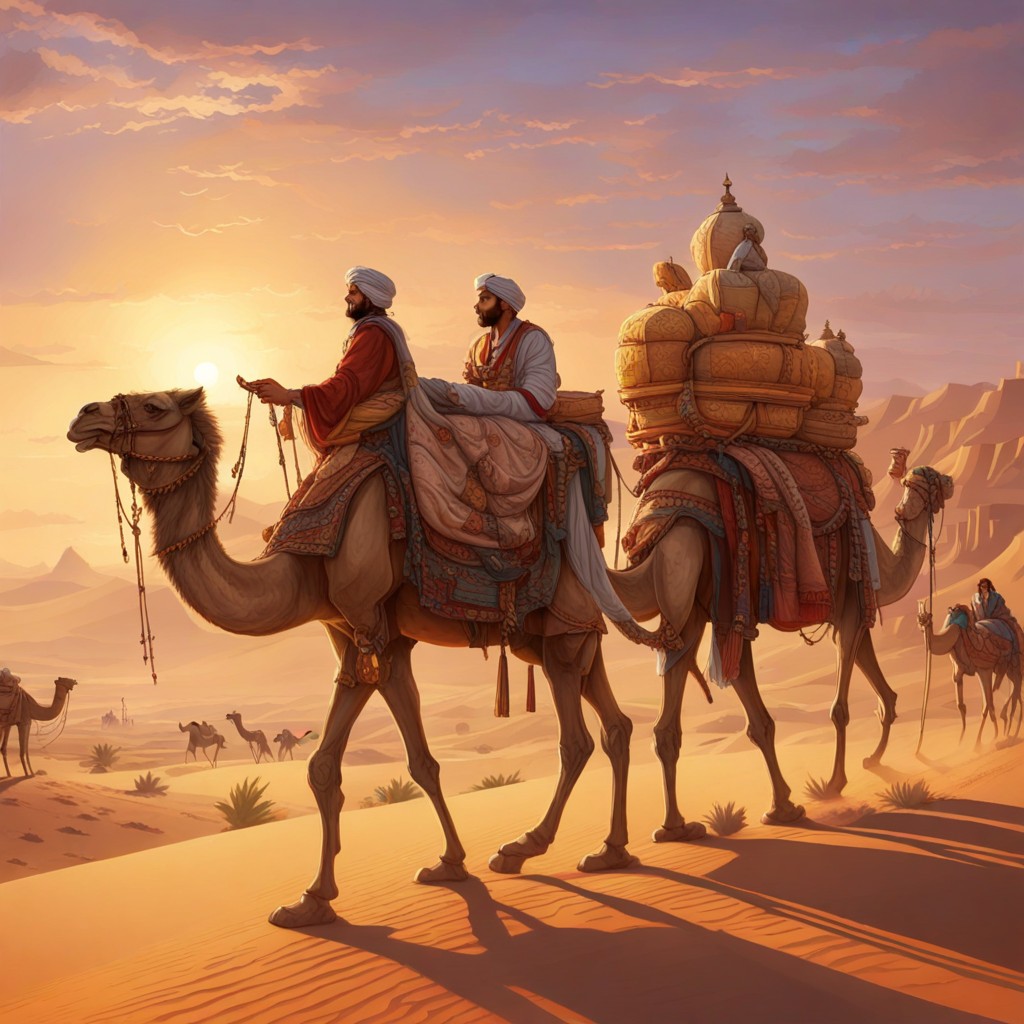
Lead a caravan across the 13th-century Silk Road—from the courts of Khanbaliq to the harbours of Constantinople—trading silk, spices, and secrets through deserts, mountain passes, and kingdoms that rise and fall between your visits. Fortune favours the bold, but the road buries the reckless.
Adventure briefing
0 heroes have answered the call.
Introduction
The caravanserai smells of dung, woodsmoke, and cardamom. You sit cross-legged on a threadbare carpet in the courtyard at Samarkand, watching your camels drink from a stone trough worn smooth by ten thousand caravans before yours. The Registan's turquoise domes blaze in the afternoon sun, and the air vibrates with the call to prayer, the haggling of merchants in six languages, and the distant clang of a coppersmith's hammer. You are a long way from home—whichever direction home happens to be.
The year is 1274. The Mongol Empire, the largest contiguous empire in human history, stretches from the Pacific coast of China to the borders of Hungary. The Pax Mongolica has opened trade routes that were closed for centuries—silk, porcelain, and gunpowder flow west; gold, glass, and horses flow east. But peace is a relative term. The Khanates fracture along lines of succession. Bandits infest the mountain passes. The Assassins' remnants lurk in Persian fortresses. Plague smoulders in the trading posts of the Crimea. And every caravan that crosses the Taklamakan Desert does so knowing that the desert has swallowed armies, let alone merchants.
You are nobody special—yet. A trader, a traveller, a person with a handful of coins, a string of pack animals, and the ambition to turn one into a thousand. The Silk Road does not care about your birth, your religion, or your language. It cares about whether you can read a contract, survive a sandstorm, bribe the right official, and arrive at your destination with enough goods intact to turn a profit. Along the way, you will navigate the courts of Mongol khans, Persian ilkhans, Mamluk sultans, and Byzantine emperors, trade with Venetian merchants, Sogdian middlemen, Indian spice brokers, and Chinese silk weavers, and hire guards, lose guards, fight bandits, and dodge tax collectors. The most dangerous enemy on the road is not the man with the sword—it is the man with the ledger.
There is no single destination—the road is the destination. Every journey is the same gamble: buy low, sell high, survive the crossing, repeat. As your wealth and reputation grow, so do the stakes. Royal courts commission you as an envoy, rival merchant houses sabotage your caravans, warlords demand tribute, and the road itself—avalanches in the Pamirs, sandstorms in the Taklamakan, pirates on the Indian Ocean—never stops trying to kill you. Some merchants retire as princes. Others are found years later, mummified by the desert wind, their goods long since looted. The Silk Road remembers neither with particular sentiment.
Technical dossier
Rule systemClassic d20 System
DurationOpen-ended
DifficultyEasy to Challenging
Character sheet tabs
statsjournalinventoryhistoryenemiesCaravanMerchant's RenownGoods & MarketsLanguages & LoreHealth & WoundsExperience & LevelParty & CompanionsCaravan WaresFactionsQuest Tracker
Content warnings
violencedeathslavery (historical context)religious tensiondisease
Tags
#historical#open-world#trade#sandbox#exploration#diplomacy
Reviews
No reviews yet.
Created by Davide Longo